
Commercial Lease Restructuring Advisory for Rent Reviews
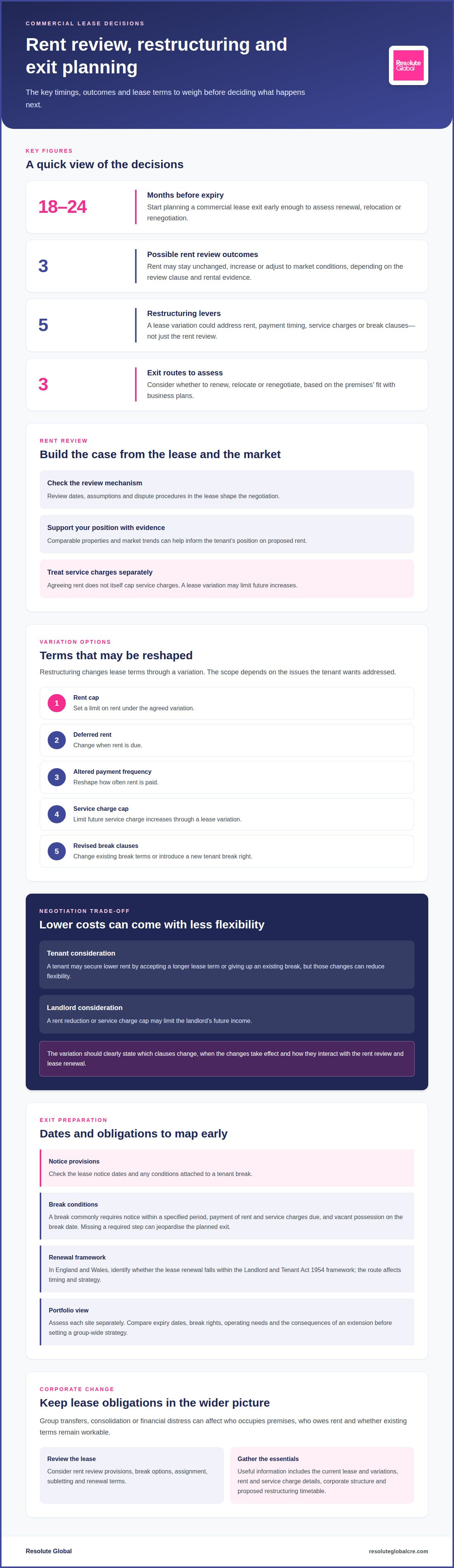
Lease decisions become harder to reshape once expiry is close. For a planned exit, UK commercial tenants are advised to begin planning 18 to 24 months before the lease expires. A commercial lease restructuring advisory can also help you assess rent review terms and negotiate changes before the curre...



Lease decisions become harder to reshape once expiry is close. For a planned exit, UK commercial tenants are advised to begin planning 18 to 24 months before the lease expires. A commercial lease restructuring advisory can also help you assess rent review terms and negotiate changes before the current agreement ends.
A rent review can affect more than the rent: it may prompt a wider assessment of whether the lease still fits your business. This guide explains how rent review negotiations work, when restructuring may help and why corporate changes can make lease terms more urgent. It covers rent, break rights, lease length and other obligations together, helping you understand the decisions ahead and the options that may support your next move.
Key Takeaways
• Assess the rent review provisions and relevant market evidence together to understand the basis for a proposed rent change.
• Consider whether renegotiating rent, break rights or service charge terms could better align the lease with your business needs.
• Plan lease exits early, as the route may involve renewal, relocation or renegotiation, with different considerations under the Landlord and Tenant Act 1954 in England and Wales.
• When corporate restructuring affects your premises, review lease obligations alongside wider business decisions; Resolute Global’s occupier-focused guidance can help bring those considerations into focus.
Rent review negotiations
A rent review can prompt wider lease changes, especially when business circumstances or occupancy costs are shifting.
Rent reductions and rent-free periods
A rent reduction lowers the agreed rent, while a rent-free period suspends rent for an agreed time. Either variation can ease costs when the current rent no longer suits the tenant’s circumstances. In return, a landlord may seek a longer lease term or the removal of an existing tenant break. A negotiated variation can also introduce a new break right, giving occupiers flexibility later.
Advisory fees and restructuring options
Restructuring changes lease terms through a variation, rather than relying only on the outcome of a rent review. Options include a rent cap, deferred rent, altered payment frequency, a service charge cap, or revised break clauses. Advisers’ fees depend on the work’s scope, lease complexity and negotiation requirements; the fee is provided after a quote request. This helps tenants weigh the advice needed against the issues they want addressed.
Commercial rent review negotiations depend on the review clause and relevant rental evidence. The review may leave rent unchanged, increase it or, in some cases, adjust it to market conditions. Comparable properties and market trends can help support a tenant’s position. Review dates, assumptions and dispute procedures in the lease shape the negotiation. Service charges need separate attention: a rent agreement does not itself cap charges, but a lease variation may limit future increases.
Both parties should weigh the trade-offs. A tenant that accepts a longer term or gives up a break may gain lower rent but lose flexibility. A landlord that agrees to a rent reduction or service charge cap may limit future income. Clear wording is essential: the variation should specify which clauses change, when the changes take effect and how they interact with the rent review and lease renewal.
How far in advance should I plan a commercial lease exit?
Begin planning a commercial lease exit 18 to 24 months before expiry. This gives your business time to assess whether to renew, relocate or renegotiate, rather than letting the deadline dictate its position. For a tenant with several sites, compare each property’s role in the estate, occupancy costs and future requirements. That review can help protect operational flexibility while negotiations develop.
In England and Wales, commercial lease renewals may be handled under the Landlord and Tenant Act 1954, according to UK legislation. The renewal route affects the timing and strategy, so identify whether the lease falls within that framework. A renewal or extension can secure continued occupation, while renegotiation may address terms that no longer suit the business. The right choice depends on the premises’ fit with current plans and the landlord’s position.
Review the lease’s notice provisions early, including any conditions attached to a tenant break. A break right commonly requires notice within a specified period, payment of rent and service charges due, and vacant possession on the break date. Missing a required step can jeopardise the planned exit. Map notice dates against internal decisions, negotiations and relocation arrangements so the business understands whether it can leave or remain.
For a real estate portfolio, assess each lease separately before setting a group-wide strategy. One site may merit renewal, whilst another could be renegotiated or exited. Compare lease expiry dates, break rights, operating needs and the consequences of an extension. A portfolio-wide lease strategy can help connect property decisions with business plans, particularly when several negotiations need to progress at once.
Corporate restructuring and commercial leases
Corporate change can affect who occupies the premises, who owes rent and whether existing lease obligations remain workable. Consider the lease alongside the wider business outcome.
Corporate restructuring and lease effects
Corporate restructuring changes a business’s structure or operations, which can affect its lease obligations and property strategy. Group transfers, consolidation or financial distress may make existing terms difficult to sustain. Transferring leases between group companies below fair value can risk clawbacks under insolvency legislation. A company voluntary arrangement is public and filed at court, so it should be considered in context, not treated as a simple way to exit a lease.
Comparing commercial lease advisers
Commercial lease advisory should connect lease analysis with the corporate change driving it. The work may cover rent review provisions, break options, assignment, subletting and renewal terms. For a UK business comparing advisory approaches, focus on whether the advice addresses its specific premises, obligations and desired outcome, rather than treating each lease in isolation. A conflict-free perspective helps keep occupier priorities central.
Tax, business rates and VAT implications
Tax treatment depends on the transaction. Group relief is ordinarily available for SDLT on intra-group property transfers, but may be clawed back if the assignee later leaves the group. A reverse premium for lease surrender is generally not subject to SDLT for either party, though it may be subject to VAT. If a tenant remains in occupation, the landlord may avoid void business rates.
Advisory costs and required documents
Advisory fees depend on the case and are given after a quote request; key cost factors include lease complexity, portfolio scope and negotiation requirements. Useful information includes the current lease, variations, rent and service charge details, corporate structure, and the proposed restructuring timetable. These help clarify which clauses need attention and how changes could affect the wider business. Bring lease decisions into a wider corporate property strategy.
Resolute Global: Global Real Estate Advisory Network
Resolute Global provides occupier-focused CRE guidance when rent reviews, corporate change or lease decisions affect your premises. Its Global Real Estate Advisory Network connects property perspectives, while its conflict-free real estate solutions keep occupier priorities at the centre.
Turn to Resolute Global when you need to assess lease obligations alongside business plans, compare renewal or exit options, or understand how restructuring may affect your property portfolio. The focus is clear, strategic guidance for occupiers, tailored to the decision rather than a one-size-fits-all route.
Contact Resolute Global to discuss your commercial property priorities.
Shape your next property decision with intent
Use the next lease milestone to connect property choices with your business’s direction. Commercial lease restructuring advisory can help frame decisions around operational priorities, risk tolerance and the flexibility your organisation needs, rather than treating the lease as an isolated document.
Before negotiations progress, align the people responsible for finance, operations and property on the outcome the business needs. A shared view can clarify internal decisions and prevent shifting priorities from pulling the process in different directions. It also keeps discussions practical: what the premises must support and which terms suit that purpose.
Resolute Global can help occupiers bring that perspective to their commercial real estate decisions. Contact Resolute Global to discuss your next property decision and take a considered step towards a lease strategy that fits your business.
Frequently Asked Questions
When should I seek lease advisory support?
Seek advice before responding to a landlord’s proposed rent review or agreeing to a lease variation. Early guidance is also useful when a merger, closure or change in space requirements could affect occupied premises. Commercial lease restructuring advisory can help assess the business implications before negotiations narrow your options. Bring in support when you need to align property decisions with finance, operations and corporate plans.
What is lease restructuring?
Lease restructuring is a negotiated change to a commercial lease before its existing terms expire. It can amend selected clauses or replace the lease with newly negotiated terms. For example, a business could seek revised rent alongside updated rights to assign or sublet. The distinction is whether the parties change specific terms or agree on a replacement arrangement.
Can I ask my landlord to accept a surrender of the lease anyway?
Yes, you can ask, but a landlord cannot be compelled to agree to a consensual surrender. The landlord may seek a premium in exchange for ending the lease and releasing tenant covenants. Before making a proposal, consider the remaining obligations and the commercial terms you could offer. Any agreed surrender should clearly record its terms and effect.
Can I exit my lease without having to involve a third party?
You can raise the possibility of an exit directly with your landlord. A third party, such as a letting agent, may facilitate lease restructuring, but the parties can begin discussions themselves. An adviser can help frame the proposal, assess alternatives and coordinate negotiations, particularly when several leases or corporate entities are involved.
If I am unable to exit my lease, are there other options?
Consider assignment, subletting, a negotiated variation or using an existing break right. With an assignment, the landlord assesses the proposed assignee’s covenant strength and ability to meet tenant obligations. A sublease can bring in an occupier, but the original tenant usually remains liable to the landlord for rent and other lease obligations. Compare that exposure with revised terms or continued occupation.
Proudly Untraditional
We’re proudly untraditional in the way we think, operate, and deliver value in the Corporate Real Estate sector.
Whether you’re a client seeking a new experience or an independent real estate adviser please get in touch to learn more.
More from the field
Keep reading for more sharp analysis on global corporate real estate


